
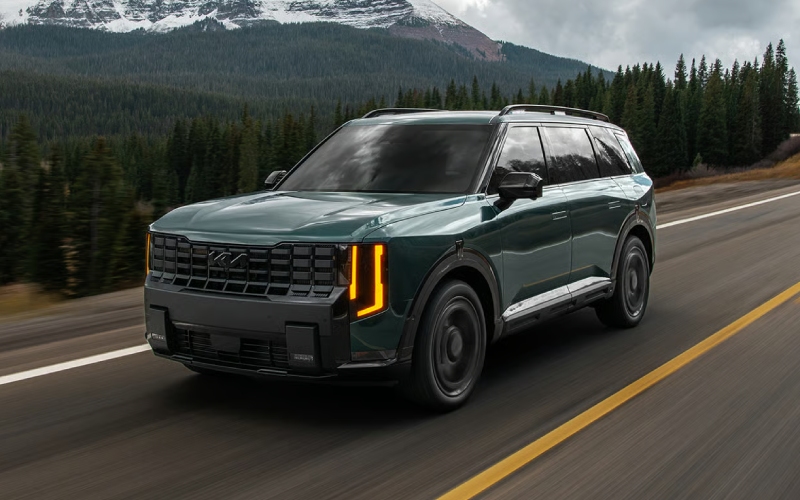
Arapahoe Kia - Does the 2027 Kia Telluride Hybrid near Wheat Ridge, CO need to be plugged in?
Drivers shopping for a roomy hybrid SUV often want the benefits of electrified performance without adding a home charger, changing daily habits, or planning public charging stops. That is exactly where the Telluride Hybrid fits well. This first-ever Telluride Turbo-Hybrid uses a traditional hybrid system, not a plug-in hybrid system, so it does not need to be plugged into an outlet. You fuel it like a gas SUV, drive it like a gas SUV, and the hybrid battery system manages charging automatically as you go.
For shoppers around Wheat Ridge, CO, this distinction matters. A three-row SUV may handle commuting, errands, school schedules, mountain routes, and longer family drives, so convenience is a major part of the purchase decision. The Telluride Hybrid gives you the smooth response of an electric motor paired with a turbocharged engine while keeping ownership simple. Instead of building your routine around charging equipment, you can focus on the vehicle's space, comfort, technology, and available capability.
How the Hybrid System Charges Itself
The Telluride Hybrid captures energy during braking and deceleration, then uses that energy to recharge the hybrid battery system. This process happens automatically in the background. When you slow down, the system can recover energy that would otherwise be lost as heat through braking. That recovered energy helps support the electric motor, which works with the turbocharged 2.5-liter engine to deliver smooth and confident acceleration.
This is one of the biggest advantages of a conventional hybrid for shoppers who want efficiency without extra charging steps. You do not need a Level 2 charger at home. You do not need to search for a public charging station. You do not need to remember to plug in overnight. The vehicle is engineered so the gas engine, electric motor, and hybrid battery system work together seamlessly during normal driving.
What This Means for Daily Ownership
Because no plug is required, the Telluride Hybrid can be especially practical for drivers who park outdoors, live in a condo or apartment, rent a home, or simply do not want to install charging equipment. It also works well for households with multiple drivers because no one needs to manage battery charging schedules. The experience stays familiar: add fuel, drive, and let the hybrid system do its work.
The Telluride Hybrid also helps answer a common concern about hybrid utility. Kia notes that its hybrid batteries are designed and positioned to maintain ample room for both passengers and cargo. That is important in a three-row SUV because shoppers do not want hybrid technology to compromise space. The cabin still offers flexible seating for up to 7 passengers, USB-C outlets in all 3 rows, a 115V outlet in the cargo area, and available smart cargo flexibility for everyday gear.
Why No-Plug Hybrid Convenience Fits Colorado Driving
Colorado driving can be varied, and that makes convenience valuable. A driver may go from neighborhood streets to highways, from work commutes to family errands, or from city traffic to open-road cruising. The Telluride Hybrid's automatic battery recharging supports that variety without asking for extra planning. Its turbocharged hybrid powertrain produces 329 hp and 339 lb.-ft. of torque, so the SUV is built to feel responsive even with passengers and cargo on board.
- No home charger needed: The hybrid system charges itself through normal driving and braking.
- Familiar fueling routine: You use gas as usual, which keeps ownership simple for busy households.
- Strong power delivery: The turbocharged hybrid system combines electric motor response with confident engine output.
- Passenger-friendly design: Kia positions the hybrid battery system to help preserve useful cabin and cargo space.
- Long-term confidence: Kia backs the hybrid battery pack with a 10-year/100,000-mile Limited Warranty.
Those points make the Telluride Hybrid appealing for shoppers who want electrified benefits but do not want the added decisions that can come with plug-in ownership. A plug-in hybrid can be a great fit for some drivers, but a no-plug hybrid is often easier for households that prioritize simplicity, range confidence, and familiar routines.
How It Differs from a Plug-In Hybrid
A plug-in hybrid usually has a larger battery and can drive a certain distance using stored electric power from an external charge. To get the most benefit from a plug-in hybrid, drivers typically charge at home or at public stations. The Telluride Hybrid takes a different approach. Its battery is designed to support the powertrain automatically, helping improve efficiency and acceleration without requiring charging stops.
This difference can shape the shopping decision. If you want an SUV that operates like a gas vehicle but uses hybrid technology to improve performance and efficiency, the Telluride Hybrid is a strong match. If you want to drive on external electric charging and have reliable charging access every day, a plug-in hybrid or EV may also be worth exploring. For many three-row SUV shoppers, however, the Telluride Hybrid's no-plug setup is the easier path.
Features to Review During a Test Drive
When evaluating the Telluride Hybrid, focus on how the hybrid system feels in real driving. Acceleration should feel smooth, especially from a stop, where electric motor response can be noticeable. You should also spend time with the cabin technology and seating layout, because the Telluride Hybrid is about more than powertrain efficiency. Its available driver-centric digital cockpit, Wireless Apple CarPlay® and Wireless Android Auto™ compatibility, available dual wireless chargers, and available Full Display Mirror® can make daily driving feel more connected and modern.
- Start and stop smoothly: Notice how the hybrid system responds during neighborhood-speed driving.
- Merge onto a highway: Evaluate power delivery from the turbocharged hybrid powertrain.
- Test passenger access: Try the tilt-and-slide 2nd-row seats and check 3rd-row entry.
- Review charging ports: Confirm USB-C access in all 3 rows and inspect the cargo-area outlet.
- Ask about AWD: If traction confidence matters, review available AWD with Terrain Mode for snow, mud, and sand.
A test drive is also the right time to compare trims. X-Line models bring added style and available capability cues, while SX Prestige and X-Line SX Prestige configurations add premium amenities such as heated and ventilated 1st and 2nd-row seats, an Ergo-Motion massaging driver's seat w/ power bolsters, a 12-in. Head-Up Display, ambient interior lighting, and Dynamic Welcome & Escort Lighting.
Frequently Asked Questions:
Does the Telluride Hybrid need a special outlet?
No. It is not designed as a plug-in vehicle, so no outlet or charging station is required. The hybrid battery system recharges automatically during driving.
Can I drive it like a normal gas SUV?
Yes. You fuel it normally, and the hybrid system works in the background. That makes it easy for drivers moving from a traditional gas-powered three-row SUV.
Does the hybrid system reduce passenger space?
Kia states that its hybrid batteries are designed and positioned to maintain ample room for passengers and cargo. The Telluride Hybrid still focuses on flexible three-row utility.
Who should consider the Telluride Hybrid?
It is a strong option for shoppers who want a spacious three-row SUV with turbo-hybrid response, no-plug convenience, advanced available technology, and practical daily usability.
Arapahoe Kia is serving Littleton, Longmont, and Wheat Ridge with helpful guidance for shoppers comparing hybrid SUVs. If you want electrified benefits without adding charging equipment, the Telluride Hybrid makes a persuasive case. It keeps the routine familiar, adds meaningful efficiency support, and preserves the comfort, technology, and versatility that make a three-row SUV valuable for everyday life.