
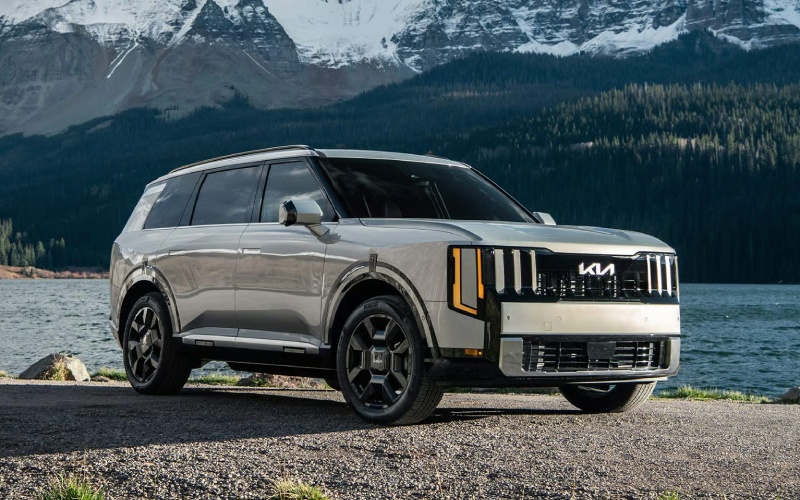
Arapahoe Kia - Which SUV offers better winter and trail confidence for families around Littleton, CO?
When drivers compare all-weather performance between these two three-row SUVs, the conversation quickly centers on traction technology, meaningful ground clearance, and transparent driver information. Both models bring robust hardware to the table, but their calibration and feature packaging can feel different on Colorado roads and trails. This guide walks through what matters for confident winter commutes and weekend trailheads—in plain terms that help your family choose wisely.
Start with traction and control. Each vehicle offers an advanced AWD system with selectable terrain modes for Snow, Sand, and Mud. Where they begin to diverge is in the added layers of hardware and visibility. On the Kia side, the rugged X-Pro trim elevates capability with 9.1 inches of ground clearance, an Electronic Limited Slip Differential (E-LSD), front and rear recovery hooks, all-terrain tires, and an available Ground View Monitor plus an Off-Road Display. Hyundai counters with HTRAC, terrain modes, and an XRT PRO package that adds a rear eLSD, exposed recovery hooks, and 8.4 inches of clearance, as well as a Surround View Monitor with forward ground view. Both can be snow-savvy when tires match the season; the differences show up on deeper ruts, steeper trail entries, and the trickier parts of a storm day.
Here’s how to frame your decision if your family routine includes school runs, ski trips, and occasional camping tracks:
- Ground clearance: Telluride X-Pro offers 9.1 inches vs. 8.4 inches on Palisade XRT PRO—an edge that reduces scraping and improves approach, breakover, and departure angles in real-world use.
- Traction hardware: Both bring an eLSD on their off-road-oriented trims, enhancing power transfer when one wheel slips; Telluride pairs this with available self-leveling rear suspension to keep loads stable.
- Low-speed visibility: Telluride’s available Ground View Monitor and Off-Road Display present terrain and vehicle status at parking-lot speeds, while Palisade’s Surround View with forward ground view assists with line selection and tight maneuvers.
- Cold-weather comfort: Each model offers heated front and available heated 2nd-row seats; Telluride adds thoughtful details like USB-C ports in all three rows and Tri-zone Auto Climate Control with ceiling-mounted rear vents.
- Altitude-ready power: A turbocharged gas engine in Telluride provides strong, consistent response for merging and passes; Palisade’s naturally aspirated V6 emphasizes smoothness over punch.
The question families ask next is which one will feel calmer and more predictable when roads are changing by the mile. The answer often comes down to the clarity of the systems that help you. In practice, the Telluride’s Highway Driving Assist 2, Enhanced Auto Emergency Braking Technology with junction features, Blind-Spot View Monitor that shows a live camera feed in the gauge cluster, and a nearly 30-inch available Digital Cockpit keep your eyes where they belong. Palisade brings a strong safety story too, with ten airbags including third-row pretensioners, Safe Exit Assist, Rear Cross-Traffic Collision-Avoidance Assist, and available Remote Smart Parking Assist. On a long day, the smoother the systems hand off tasks and information, the less fatigue builds—an area where Telluride’s presentation stands out.
It’s also useful to think past the first snow and look at ownership versatility for the rest of the year. The Telluride’s trail hardware is not just signage; it’s a real benefit on forest-service roads to campsites, boat launches with uneven traction, and early spring trailheads where freeze-thaw cycles rut the approach. Hyundai’s XRT PRO is thoughtfully assembled and fully capable for most families, but the extra ground clearance on Telluride X-Pro and its cohesive set of trail tools provide a touch more margin—especially for drivers who occasionally push past groomed lots and gravel.
Our recommendation for families who split time between school-week errands and mountain weekends is to test both SUVs on the same day, on routes with elevation change and rough shoulders. Bring your car seats, load your gear, and simulate your routine. That will make the differences in visibility, power response, and traction tuning more obvious—and more meaningful for your life. Arapahoe Kia is happy to help you plan a route that captures real Colorado driving.
Frequently Asked Questions:
Do I need all-terrain tires for winter driving, or just good snow tires?
For winter road driving, dedicated winter tires typically provide better cold-weather grip and braking than all-terrains. All-terrain tires add durability and traction off-pavement; many families choose winter tires for December through March and switch back when temperatures rise.
How important is ground clearance for ski trips?
Ground clearance matters when berms build near plow lines, on unpaved shoulders, and at rutted trailheads. A difference of roughly three-quarters of an inch to an inch can be the line between gliding over packed snow or scraping a front valance.
Which is more confidence-inspiring on icy mornings, hybrid or gas?
Both hybrid and gas versions can feel secure when equipped with proper winter tires. The Telluride’s turbocharged gas engine provides strong torque at altitude, which helps with short on-ramps and quick merges typical of Colorado interchanges. Choose based on your driving mix, towing needs, and how you prefer throttle response to feel in cold starts.
Arapahoe Kia, serving Littleton, Longmont, and Wheat Ridge, is ready to help you compare features side by side, identify the traction tech that fits your routes, and set up a drive that reflects your everyday conditions.